Artist Cannupa Hanska Luger Explores Bison's Role in Native American History
 ··2 min read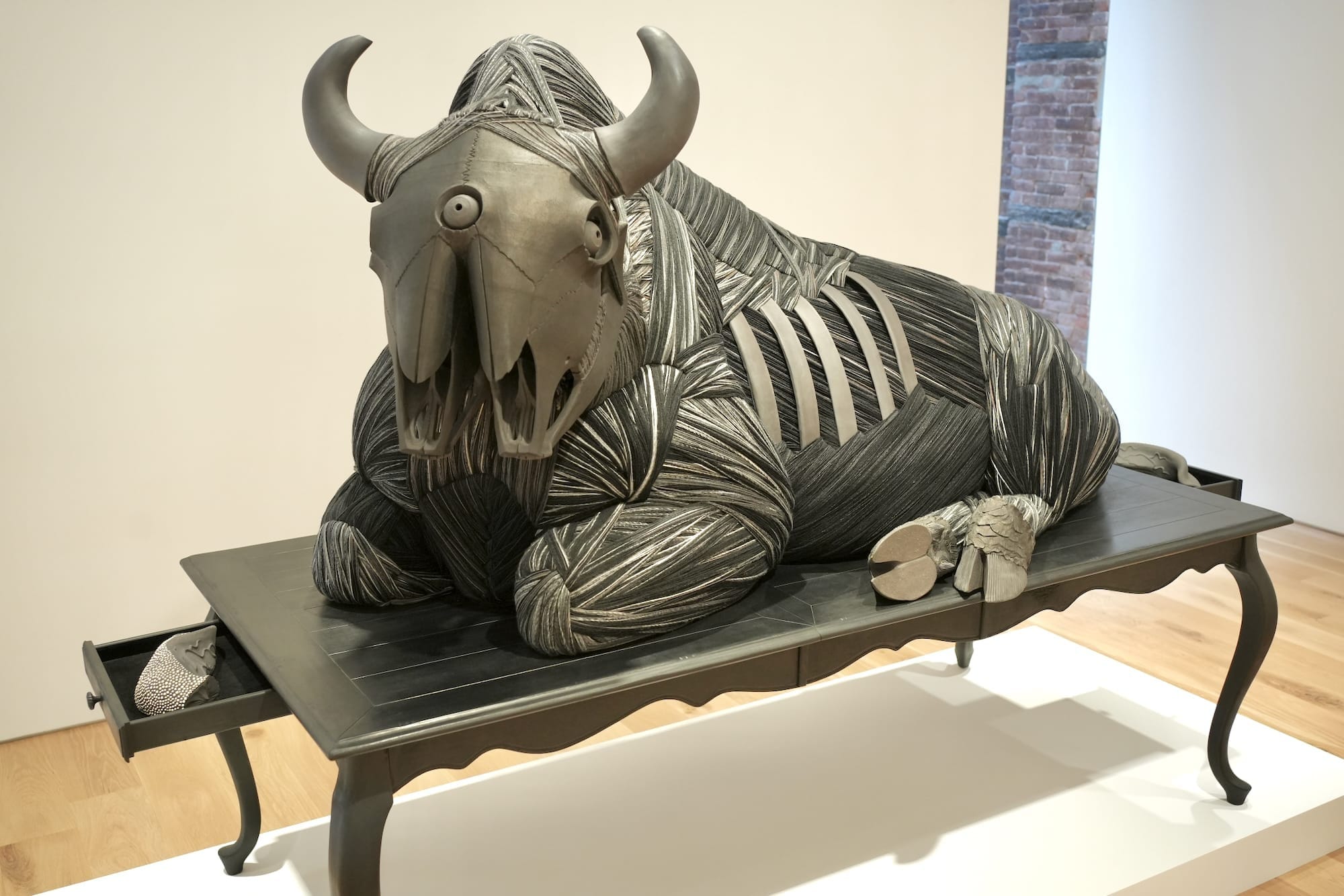
Artist Cannupa Hanska Luger has opened a new exhibition, American Traditional, at the Garth Greenan Gallery in Soho. The show explores the historical and cultural significance of bison to Native American communities. The exhibition features a synthesis of wood, ink, and archive materials, marking a shift from Luger's previous participatory, ceramics-focused projects.
Luger, an enrolled citizen of the Three Affiliated Tribes of the Fort Berthold Reservation, draws from his deep roots on the Great Plains. His work, particularly the piece titled 'Requiem' (2026), addresses the historical destruction of bison populations by European settlers. The piece features a black abstracted bison atop a blackened rendering of a 19th-century American wood dining table, symbolizing the impact of colonial activities on the bison's habitat and the Native American tribes that relied on them.
Luger's work is informed by historical accounts, such as Mari Sandoz's 1954 book The Buffalo Hunters: The Story of the Hide Men. The book details the once-abundant bison populations and the subsequent industrial-scale slaughter by European settlers, which had devastating effects on Native American communities. The exhibition aims to honor the bison, an animal that many Native American groups lived in symbiotic relationship with for millennia, and to acknowledge the care that such a historical tragedy demands.
CONTEXT: The exhibition is part of a broader effort to indigenize museums and acknowledge the historical and cultural significance of Native American communities. It follows the 2021 exhibition Preoccupied: Indigenizing the Museum, which included a similar intervention by Yurok artist Stormi Turner. Turner's work covered an 1892 image of two men with a hill of buffalo skulls, providing a context of tragedy and care for the historical event.