ReactOS Achieves NTFS Installation Capability
 ··2 min read
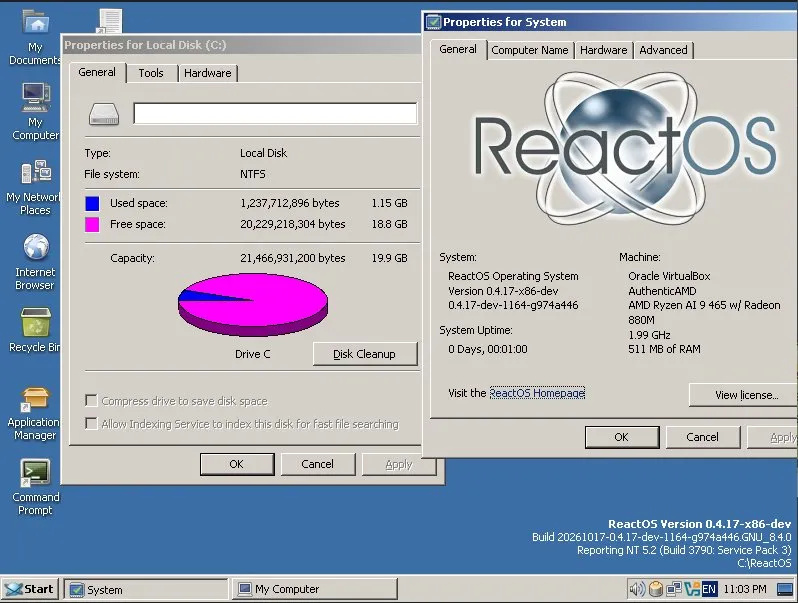
ReactOS, an open-source alternative to Windows, has reached a significant milestone by enabling direct installation onto NTFS drive partitions. This development, reported by Phoronix, addresses a longstanding challenge for the project and brings it closer to its beta release. Previously, ReactOS installations required a FAT32 partition, but the new capability allows for installation on the widely used NTFS file system, which has been standard since Windows XP.
NTFS, a proprietary Microsoft file system, has been a core component of Windows operating systems since Windows NT 3.1 in 1993. The variant introduced with Windows XP in 2001 remains the standard for most Windows systems today. ReactOS aims to achieve binary compatibility with Windows Server 2003, and the ability to install on NTFS drives removes a significant barrier to replicating the Windows environment.
Despite this progress, the new NTFS driver in ReactOS still lacks several key features. It does not yet support caching, which affects performance, nor does it include journaling or security features. The ReactOS team has cautioned users about potential undiscovered bugs and advised even experienced users to proceed with care. The announcement was made on the platform X.
ReactOS's goal is to provide an open-source operating system that is compatible with Windows applications and drivers. This latest development is a step towards that goal, but there is still work to be done before it can fully replicate the Windows environment.
CONTEXT: This development is significant because it brings ReactOS closer to its goal of binary compatibility with Windows Server 2003, making it a more viable alternative for users seeking an open-source operating system. However, the lack of full NTFS support and potential bugs mean that it is not yet a direct replacement for Windows.