
Giant Oarfish Found in Chile Sparks Seismic Fears
 ··1 min read
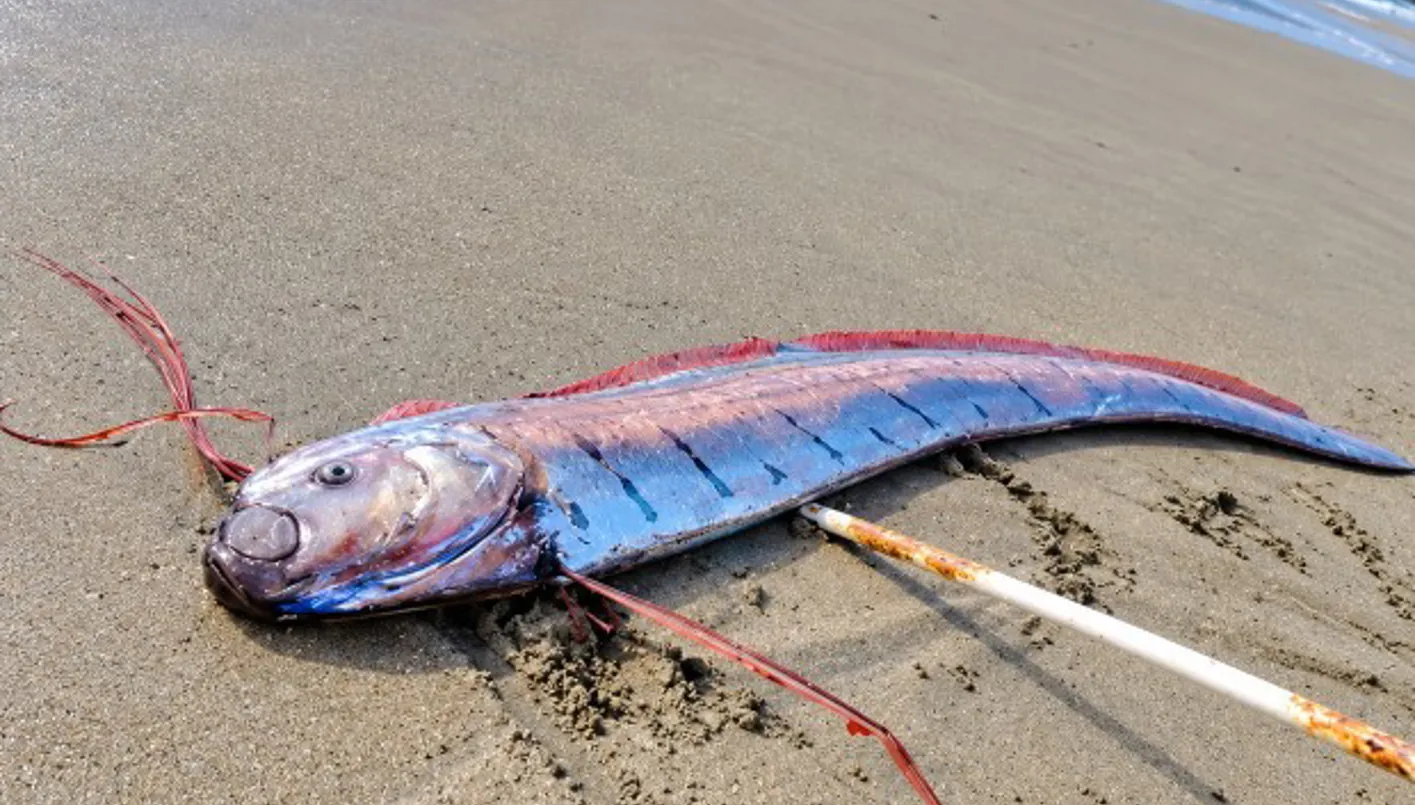
A giant oarfish measuring approximately 16 feet (4.9 meters) was found on a beach in Mejillones, northern Chile, on Tuesday, sparking fears of a potential earthquake in the seismically active region. The discovery has drawn comparisons to the Japanese folklore creature known as the “apocalypse fish,” which is believed to surface before natural disasters.
Social media users speculated that the appearance of the oarfish could be a sign of an impending earthquake. However, there is no scientific evidence to support a correlation between the fish and seismic activity.
The discovery was announced by the Center for Marine Life Research and Cetacean Monitoring in Chile. In a 2019 study published in the Bulletin of the Seismological Society of America, Japanese researchers analyzed 336 reports of deep-sea fish sightings alongside 221 earthquakes of magnitude 6 or higher in Japan between 1928 and 2011. The study, conducted by a team from Tokai University, found no statistically significant link between the appearances of these fish and earthquakes, describing the perceived connection as a “spurious correlation” and not a reliable indicator of impending disasters.
Chile is located along one of the world's most active tectonic boundaries, where the Nazca Plate subducts beneath the South American Plate, leading to frequent earthquakes and volcanic activity.
CONTEXT: The discovery of the oarfish highlights the ongoing interest in understanding potential natural indicators of seismic activity, despite the lack of scientific evidence supporting such correlations. This event underscores the importance of reliable scientific research in informing public perception and safety measures in seismically active regions.


