Anticipated Military Agreement Between Libyan Leaders in Turkey
 ··2 min read
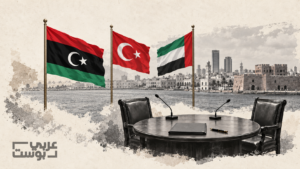
An anticipated military agreement is set to be signed in Ankara, Turkey, between Libyan military leaders. The agreement involves the distribution of military leadership responsibilities between eastern and western Libya, and the establishment of a joint operations room in Sirt. The deal is expected to be signed by Khalifa Haftar's deputy, General Sadam Haftar, and the Deputy Minister of Defense of the Government of National Unity, General Abdul Salam Al-Zubi.
According to a military source, the agreement aims to have General Sadam Haftar lead the army in the eastern region, while General Al-Zubi will lead the army in the western region. A joint operations room in Sirt will coordinate efforts between the two sides. However, key questions remain unanswered, including who will hold the overall command of the forces and the extent of the authorities granted to each party. It is also unclear whether the joint operations room will have the authority to issue binding military orders or if its role will be limited to coordination and information exchange.
This development comes amidst increased Turkish engagement with Libyan parties from both the east and the west, following the House of Representatives' approval of the maritime agreement signed with Ankara in 2019. The military agreement is also tied to an expected political settlement, the details of which have not yet been disclosed. Initially, General Sadam Haftar insisted on signing both military and political agreements simultaneously. However, he later accepted a separation of the agreements, contingent on receiving Turkish and Emirati guarantees for a future political deal.
The agreement's significance lies in its potential to reshape the political landscape in Libya. The negotiations extend beyond military coordination to address the future of political power in the country. However, there is a lack of confirmed information regarding the parties that will sign the anticipated political agreement, the positions and authorities it may encompass, or the mechanisms that will ensure its implementation. Additionally, it is unclear whether the guarantees mentioned relate to achieving a comprehensive settlement or specific arrangements for power and influence sharing.
If the military agreement is finalized, the primary test will not be the distribution of responsibilities between General Sadam Haftar and General Al-Zubi, but rather the integration of this framework within the broader Libyan military structure and its alignment with the country's political dynamics.