Ancient Ice Sheet Growth Reversed by Modern Climate Change
 ··2 min read
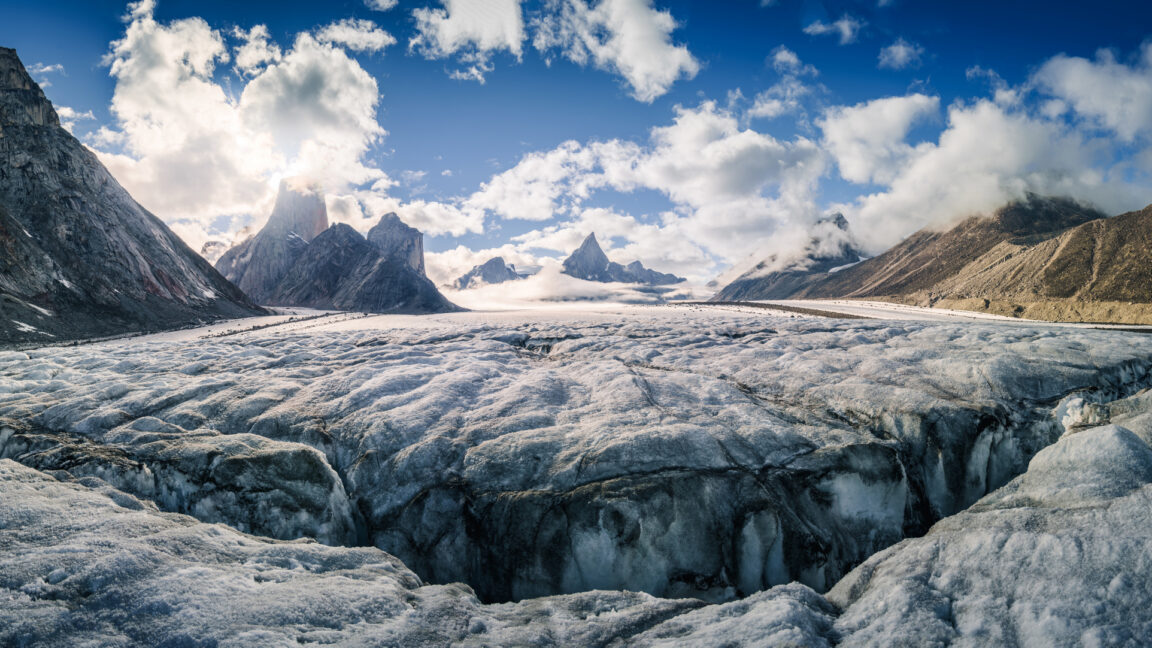
Researchers have found direct physical evidence indicating that the Laurentide Ice Sheet, which once covered most of Canada, began to grow again approximately 2,000 years ago. This finding, published in a recent Science study, suggests that a new ice age might have been initiated around this time. The study focuses on the Barnes Ice Cap, the last remaining fragment of the Laurentide Ice Sheet, located on the central plateau of Baffin Island in the Canadian Arctic.
The Laurentide Ice Sheet reached its smallest size about 3,600 years ago before starting to re-expand. This expansion was likely the beginning of the next glaciation, a process that continued until around 1960. At this point, human-induced climate warming reversed the growth of the ice sheet. The Barnes Ice Cap, now a deflated core of what was once a two-mile-thick ice dome, provides crucial insights into the history of the Laurentide Ice Sheet.
The unique conditions of the Barnes Ice Cap allow it to preserve a record of its own history. Nicolás Young, a geologist at Columbia University's Lamont-Doherty Earth Observatory and the lead author of the study, explains that the temperature at the base of the ice cap plays a key role in this preservation. This temperature, along with other factors, has enabled the ice cap to retain evidence of its past expansions and contractions.
The study highlights the significant impact of human activities on the Earth's climate. The reversal of the ice sheet's growth around 1960 marks a clear shift in the natural cycle of glaciation, underscoring the influence of modern climate change. The findings suggest that without human intervention, the Earth might have entered a new ice age.
CONTEXT: This study provides valuable insights into the Earth's climate history and the impact of human activities on natural processes. Understanding the dynamics of ice sheet growth and retreat is crucial for predicting future climate changes and their potential effects on sea levels and global ecosystems.