Israel's Netanyahu Calls for Broad National Government
 ··3 min read
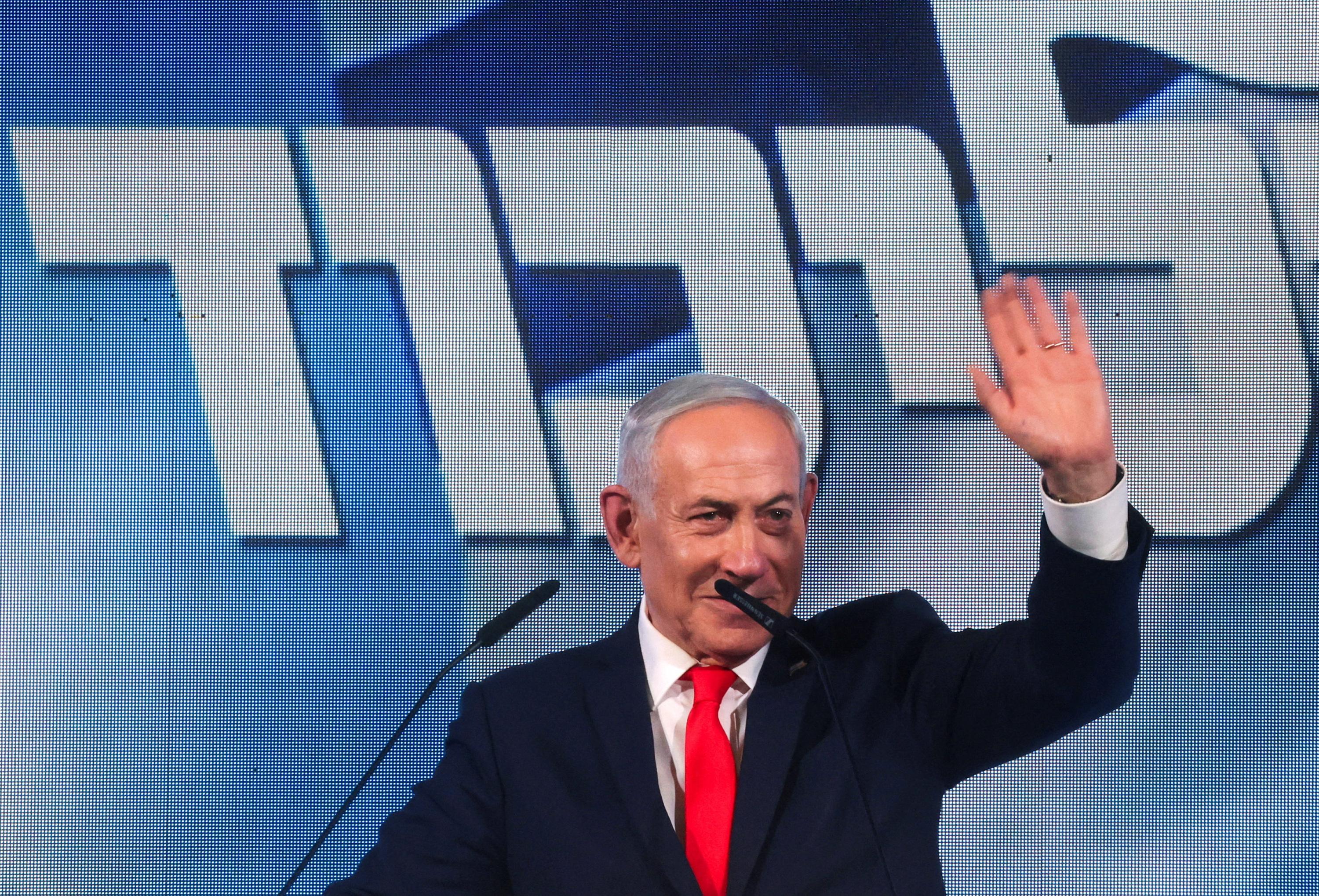
Israeli Prime Minister Benjamin Netanyahu has called for the formation of a broad national government following the recent election, in which his Likud party secured the most seats. Netanyahu aims to lead this government, which would exclude the Arab parties that achieved a record number of seats.
The Likud party's victory marks a significant political shift, as it won 32 seats out of 120 in the Knesset, Israel's parliament. Netanyahu's call for a broad national government comes as a surprise to some, given the fragmented political landscape and the diverse range of parties that won seats.
Netanyahu has stated that the Arab parties, which won a record 15 seats, should be excluded from the government. He accused these parties of supporting terrorism and denying the existence of the Jewish state. This stance has sparked controversy and debate within Israel and internationally.
The Arab parties, collectively known as the Joint List, have rejected Netanyahu's accusations. They argue that their participation in the government is crucial for representing the interests of the Arab minority in Israel, which makes up approximately 21% of the population.
The Joint List's success in the election is seen as a significant milestone for Arab representation in Israeli politics. The coalition of four Arab parties won more seats than any other single Arab party has in the past, reflecting a growing political awareness and activism among Arab citizens.
Netanyahu's call for a broad national government has raised questions about the future of Israeli politics. Some analysts suggest that such a government could provide stability and unity in the face of ongoing challenges, such as the conflict with the Palestinians and regional tensions. Others, however, argue that excluding the Arab parties could further polarize Israeli society and undermine democratic principles.
The formation of a new government in Israel is a complex process that involves negotiations and coalitions. Netanyahu's Likud party will need to secure the support of at least 61 seats in the Knesset to form a majority government. This will likely involve negotiations with other right-wing and centrist parties.
In the meantime, the political landscape in Israel remains uncertain. The country faces a range of challenges, from economic issues to security concerns and the ongoing conflict with the Palestinians. The outcome of the government formation process will have significant implications for Israel's domestic and foreign policies.
The political deadlock in Israel has been a recurring issue in recent years, with multiple elections and failed attempts to form a stable government. The current situation highlights the challenges of forming a government in a highly fragmented political system.
Netanyahu's call for a broad national government under his leadership comes at a critical juncture for Israel. The country is grappling with a range of domestic and international challenges, and the formation of a new government will be crucial in determining the path forward.