
Astronomers Discover Dead Star Emitting Green Light
 ··1 min read
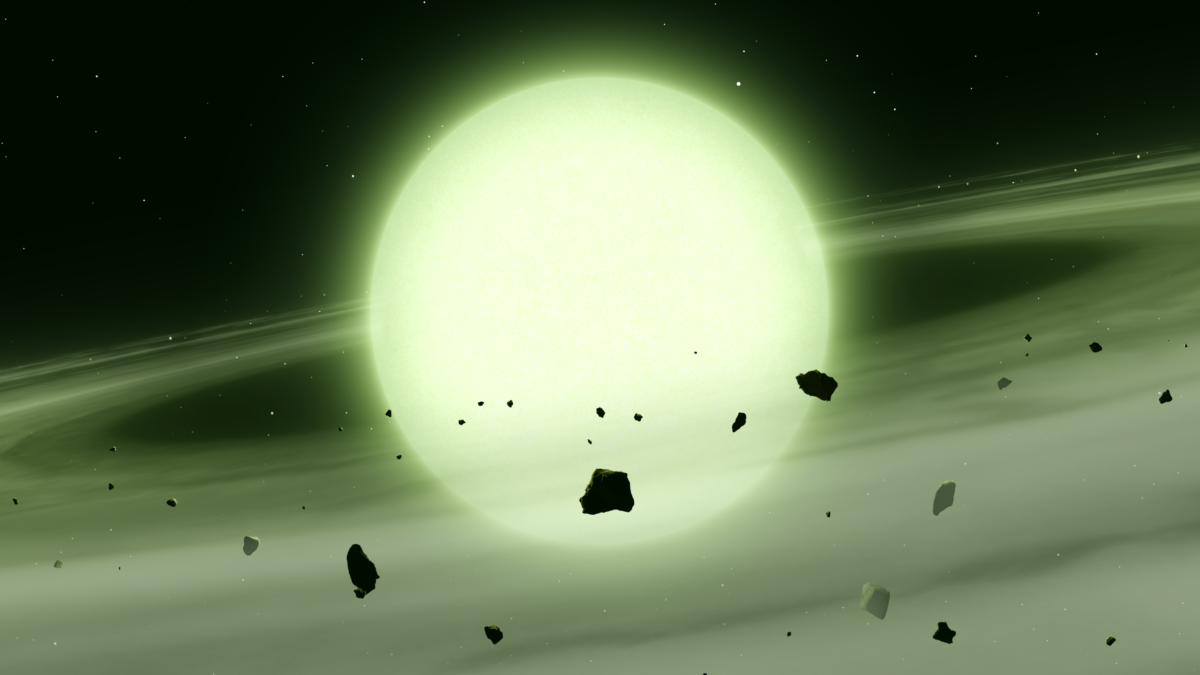
Astronomers have discovered a dead star emitting an unusual green glow, marking the first time such a phenomenon has been observed. The star, a white dwarf, is located in the constellation of Cassiopeia, approximately 1,400 light-years from Earth.
The discovery was made using the Hubble Space Telescope and the Very Large Telescope in Chile. The green glow is believed to be caused by the presence of oxygen in the star's atmosphere.
The white dwarf is part of a binary star system, which means it orbits another star. The companion star is a red giant, a star that has exhausted its core hydrogen and has expanded significantly.
The green glow is a result of the interaction between the white dwarf and the red giant. The white dwarf is accreting matter from the red giant, which is causing it to emit the unusual green light.
The discovery provides new insights into the behavior of white dwarfs and their interactions with other stars. It also raises questions about the composition of the star's atmosphere and the processes that lead to the emission of green light.
The study, led by researchers from the University of California, Berkeley, was published in the journal Nature Astronomy.


