US Official: Iran's Support Bolsters Houthi Capabilities
 ··3 min read
US Secretary of State Mark Rubio has publicly acknowledged that Iran's support has significantly enhanced the capabilities of the Houthi movement in Yemen. This statement, made via the US Embassy in Yemen's official X account, underscores the ongoing geopolitical tensions in the region.
Rubio specifically highlighted the direct support from Iran as a key factor in the Houthis' current military prowess. This revelation comes amid a backdrop of escalating conflicts and diplomatic maneuvers involving Iran, the United States, and various regional actors.
The US Embassy's statement on X emphasized the importance of addressing Iran's role in the Yemen conflict. This disclosure is part of a broader US strategy to raise awareness about Iran's influence in the region and to garner international support for countermeasures. The statement also reflects the US's commitment to monitoring and addressing the flow of weapons and military aid to non-state actors.
In response to the US allegations, Iranian officials have consistently denied any involvement in arming or supporting the Houthis. They maintain that their support is limited to humanitarian aid and diplomatic efforts to resolve the conflict. This denial contrasts sharply with the US's claims and adds another layer of complexity to the already intricate geopolitical landscape of the Middle East.
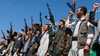
The Houthis, for their part, have not officially commented on the US allegations. However, their actions on the ground suggest a well-equipped and organized fighting force, which aligns with the US's assessment of Iran's support. The Houthis have been involved in numerous military operations, including drone and missile attacks, which have targeted both Saudi-led coalition forces and civilian infrastructure.
The conflict in Yemen, which began in 2014, has resulted in one of the world's worst humanitarian crises. The UN estimates that over 233,000 people have been killed, both directly and indirectly, due to the conflict. Millions more have been displaced, and the country faces severe shortages of food, water, and medical supplies. The ongoing violence has also led to a collapse of basic services, exacerbating the humanitarian situation.
The international community has been grappling with the Yemen conflict for years, with various peace initiatives and ceasefire agreements failing to achieve lasting results. The US's latest statement on Iran's support for the Houthis adds a new dimension to these efforts, as it seeks to shift the focus towards Iran's role in prolonging the conflict. This approach aims to build a broader coalition of international support to pressure Iran and the Houthis into negotiating a sustainable peace.
The US's strategy also involves diplomatic efforts to engage with regional actors, including Saudi Arabia and the United Arab Emirates, which have been key players in the conflict. These countries have provided military support to the internationally recognized Yemeni government, which has been fighting against the Houthis. The US hopes that by aligning with these regional powers, it can exert greater pressure on Iran and the Houthis to cease their military activities and engage in meaningful peace talks.
However, the path to peace in Yemen remains fraught with challenges. The conflict is deeply rooted in political, sectarian, and tribal divisions, making it difficult to find a unified solution. Additionally, the involvement of external actors, including Iran and Saudi Arabia, has further complicated the situation, as their geopolitical interests often clash with the goal of achieving a lasting peace.
The US's latest statement on Iran's support for the Houthis is a significant development in the ongoing conflict. It highlights the need for a comprehensive approach that addresses the root causes of the conflict and involves all relevant stakeholders. Only through sustained diplomatic efforts and international cooperation can a lasting peace be achieved in Yemen.