Iran's Network of Over 5,000 Entities Bypasses Sanctions for Military Imports
 ··2 min read
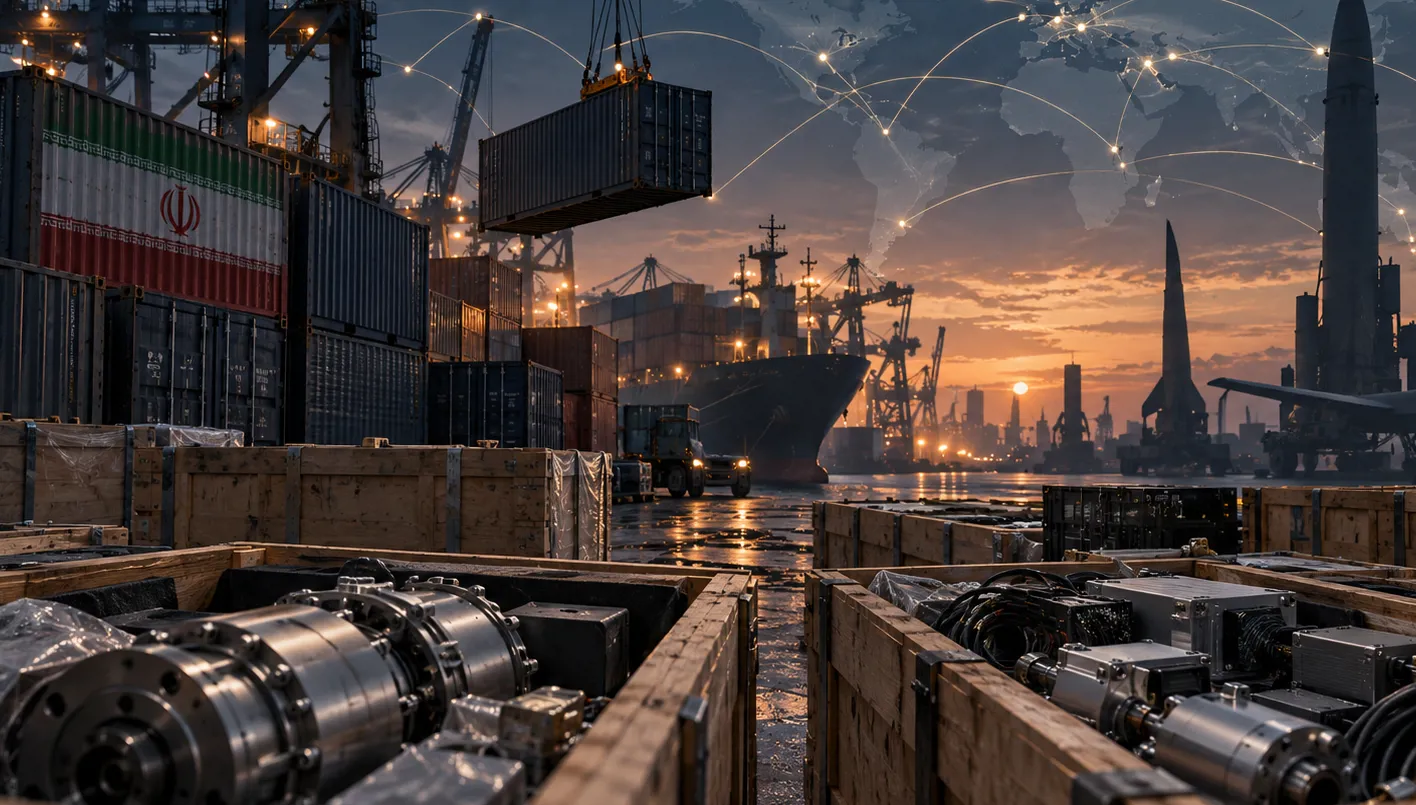
An investigation by Reuters has uncovered an extensive network of over 5,000 entities used by Iran to import military equipment and components, bypassing Western sanctions and a U.S. naval blockade. The network, which includes military and financial entities, has facilitated the import of materials used in the production of rockets and drones, as well as other military hardware.
One entity within the network imported equipment valued at $2.3 billion between January 2025 and June 2026. The shipment included materials for rocket fuel production, explosives, weapon components, and heavy-duty trucks that can be used as mobile launch platforms. Shipments continued to arrive in Iran via land, sea, and air, even during the early months of the war that began on February 28, 2026, according to records reviewed by Reuters.
The investigation was based on thousands of Iranian banking, governmental, and corporate records, as well as import data, in collaboration with the Israeli-American risk consulting firm 240 Analytics. The entities, which have addresses in Tehran, share a common naming convention starting with the letters 'Vaja,' an abbreviation for the Iranian Ministry of Defense. Despite being registered as established on February 11, 1979, most of these entities were actually founded in 2013, coinciding with the intensification of sanctions on the Iranian economy. Some of these entities are linked to the Revolutionary Guards and economic institutions controlled by the Iranian elite.
Reuters found no evidence that any of the identified entities were listed on Western sanctions lists, despite sanctions imposed on the Iranian military establishment. The investigation revealed that the network relies on intermediaries and front companies abroad to purchase goods using revenue from oil sales, which Reuters describes as illicit. These goods are then shipped to Iran.
Data showed that 97% of the shipments reviewed by Reuters were settled 'without transferring money.' Instead of transferring funds across borders, Iranian intermediaries residing abroad used funds deposited in foreign banks to pay for the purchases. A former U.S. Treasury Department official, Meydad Maliki, stated that this mechanism creates a parallel system for external trade, facilitating Iran's military procurement.
One notable entity, 'Vaja 346428,' imported chemical materials used in the production of solid rocket fuel and components for drone engines. The investigation highlighted the complexity and scale of Iran's efforts to circumvent sanctions, utilizing a vast network of entities and sophisticated financial mechanisms.
The investigation underscores the challenges faced by international efforts to enforce sanctions against Iran, particularly in the context of ongoing military conflicts and the country's strategic use of intermediaries and front companies.