Scientists Create Synthetic Living Cell
 ··2 min read
Researchers have successfully created a synthetic living cell, marking a significant advancement in biological engineering. The breakthrough, presented at the Institute for the History of Science in Philadelphia, has sparked discussions about the future of biological research and its implications.
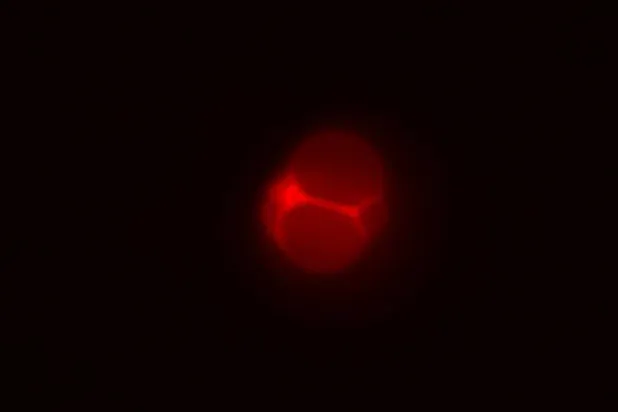
The synthetic cell, a significant leap in biological engineering, was developed by a team of scientists. The cell, which glows red, was displayed on a screen during a presentation by Katie Adamala, a prominent researcher in the field. Adamala highlighted the potential of this breakthrough, suggesting that it could pave the way for new medical treatments and a deeper understanding of life's fundamental processes.
The creation of the synthetic cell involved complex biological engineering techniques. The process began with the design of a minimal genome, which was then synthesized and inserted into a cell. This genome contained only the essential genes necessary for the cell to function, allowing researchers to study the basic mechanisms of life in isolation.
Adamala emphasized the importance of this research in advancing our understanding of biology. By creating a synthetic cell with a minimal genome, researchers can study the fundamental processes of life without the complexity of a natural cell. This could lead to new insights into how cells function and how diseases develop, potentially revolutionizing medical treatments.
The synthetic cell's glowing red color is a result of a specific genetic modification. This modification allows researchers to track the cell's activity and observe its behavior in real-time. The ability to monitor the cell's activity is crucial for understanding how it functions and how it interacts with its environment.
The implications of this breakthrough are vast. The synthetic cell could be used to develop new medical treatments, such as targeted therapies for diseases like cancer. It could also be used to study the fundamental processes of life, leading to a deeper understanding of biology and its applications. Additionally, the synthetic cell could be used to create new biological systems, such as biofuels or bioplastics, which could have significant environmental benefits.
The creation of a synthetic living cell is a significant milestone in biological engineering. It represents a major advancement in our ability to manipulate and understand life at a fundamental level. However, it also raises important ethical and philosophical questions about the nature of life and the boundaries of scientific research. As researchers continue to push the limits of what is possible, it will be crucial to engage in thoughtful and informed discussions about the implications of this technology and its potential applications.