Egypt's Medical Student Crisis: Repeated Failures Spark Calls for Caps
 ··3 min read
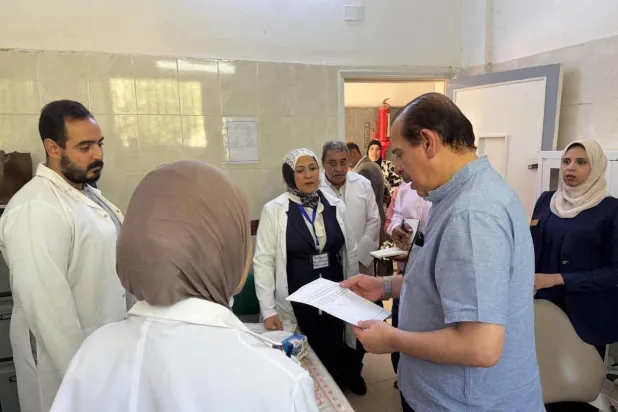
Egypt is grappling with a mounting crisis in medical education, as repeated failures among students have sparked calls for limits on admissions. The situation has intensified due to the expansion of medical colleges in private and public universities, which have accepted students with lower entrance scores.
Medical colleges in Egypt have seen a significant increase in the number of students failing to pass their exams, leading to a backlog of students who are unable to graduate on time. This issue is particularly pronounced in private and public universities, where the number of medical colleges has grown rapidly in recent years.
Medical colleges in Egypt have seen a significant increase in the number of students failing to pass their exams, leading to a backlog of students who are unable to graduate on time. This issue is particularly pronounced in private and public universities, where the number of medical colleges has grown rapidly in recent years.
The surge in medical colleges has led to a situation where many students are struggling to keep up with the rigorous demands of medical education. This has resulted in a high failure rate, with many students repeating courses and delaying their graduation.
Experts have attributed the high failure rate to the low entrance scores of many students, who are accepted into medical colleges despite not meeting the required academic standards. This has led to a situation where many students are ill-prepared for the demands of medical education, resulting in a high failure rate.
The crisis has also highlighted the need for better regulation and oversight of medical colleges in Egypt. Many experts have called for stricter admission standards and better monitoring of academic performance to ensure that only qualified students are accepted into medical colleges.
In response to the crisis, some medical colleges have implemented measures to help students who are struggling. These measures include providing additional support and resources, such as tutoring and study groups, to help students succeed. However, many experts believe that these measures are not enough to address the root causes of the crisis.
The crisis has also had a significant impact on the healthcare system in Egypt. The backlog of students who are unable to graduate on time has led to a shortage of qualified doctors, which has put a strain on the healthcare system. This has resulted in longer wait times for patients and a decrease in the quality of care.
As the crisis continues to unfold, many experts are calling for a comprehensive review of the medical education system in Egypt. They believe that only through a thorough examination of the current system and the implementation of meaningful reforms can the crisis be addressed and the quality of medical education in Egypt be improved.