Israel Faces Political Deadlock After Election Results
 ··2 min read
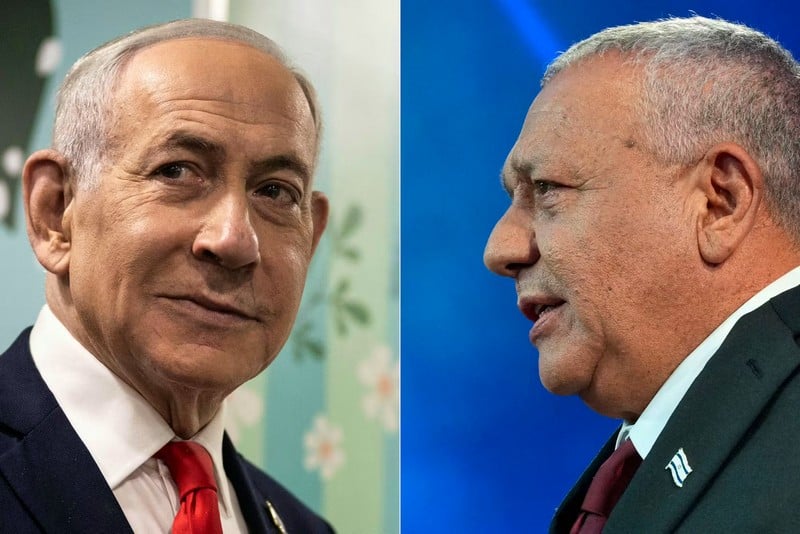
Israel is grappling with political uncertainty following the latest legislative elections, which failed to produce a clear winner. Neither Prime Minister Benjamin Netanyahu nor his main rival, Benny Gantz, secured the 61 seats required to form a government in the 120-seat Knesset.
Netanyahu's bloc, which includes far-right and ultra-Orthodox parties, won 53 seats, with his Likud party taking 27. Gantz's bloc secured 48 seats, with his Yesh Atid party winning 21. The remaining seats are held by smaller parties, including the Arab Joint List, which won 19 seats.
President Isaac Herzog, who is tasked with selecting the individual best positioned to form a government, has urged parties to avoid new elections. However, the path to forming a coalition is fraught with challenges due to ideological differences and refusals from some opposition leaders to cooperate with Netanyahu.
Netanyahu's options are limited by the stances of key opponents. The left-wing Democratic party, led by Yair Golan, has ruled out joining a coalition with Netanyahu. Avigdor Liberman, leader of the Yisrael Beiteinu party, has stated that any acceptable coalition must exclude Netanyahu personally. Naftali Bennett, whose Yamina party won 12 seats, has not yet made a final decision, but his comments about potentially cooperating with Netanyahu's camp have sparked political controversy.
Gantz faces similar difficulties in securing the necessary seats. He has considered seeking support from the Arab Joint List or attempting to lure parties from Netanyahu's bloc. Mansour Abbas, leader of the United Arab List, has expressed willingness to engage in negotiations, but the feasibility of such alliances remains uncertain.
Observers have noted that a compromise between Netanyahu and Gantz is unlikely, given Gantz's campaign promise to oust Netanyahu and his repeated refusal to consider a power-sharing agreement similar to the one that briefly united Netanyahu and Benny Gantz in 2020.