Morocco's 2027 Budget Faces Economic Growth Uncertainty
 ··2 min read
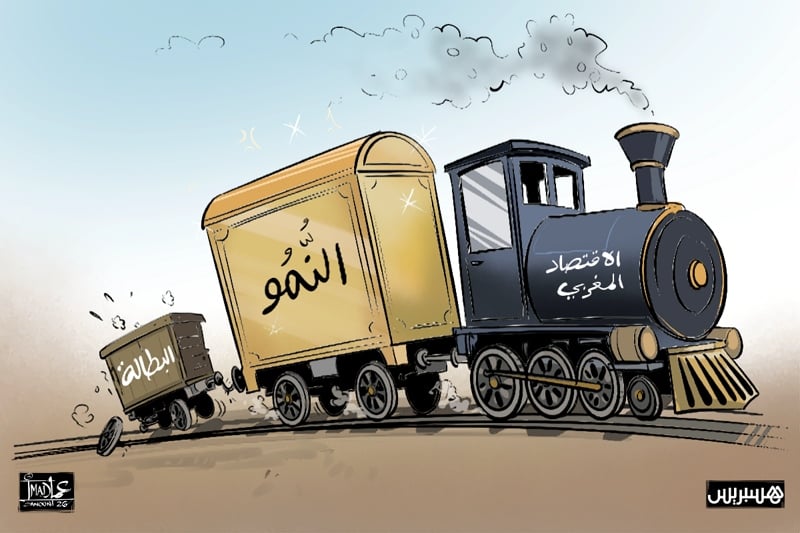
Morocco's 2027 budget is facing uncertainty due to differing economic growth projections and global market volatility. The government has forecasted a 3.7% growth rate, while national institutions predict a more conservative 2.9% to 3%.
The government's budget proposal for 2027 is based on an expected 3.7% economic growth, a decrease from the 4.7% projected for the end of the current year. Meanwhile, the High Planning Commission estimates 3% growth, and Bank Al-Maghrib predicts 2.9%.
This discrepancy could lead to a 0.8% difference in growth rates, potentially resulting in a loss of 3.8 billion Moroccan dirhams in tax revenue and a 0.2% increase in the budget deficit as a percentage of GDP, if the more conservative estimate proves accurate.
The government's optimism has gradually decreased over the past two years. Initial projections for 2027 were 4.2%, later revised to 4.1% and then 3.7%. Despite this, the government's projections remain higher than those of national institutions. The budget also assumes stable energy prices, exchange rates, and external demand, although global markets remain volatile.
The budget sets the reference price for a barrel of Brent crude at $75, compared to an average of $91 in the first eight months of 2026. Sensitivity analysis shows that if oil prices remain at $87, the cost of debt servicing could increase by 8 billion dirhams, while slower growth could reduce tax revenue by 3.8 billion dirhams, totaling a potential 11.8 billion dirhams in additional costs.
Additionally, the budget relies on expected improvements in energy prices, exchange rates, and external demand. However, global markets remain volatile, with the potential for further fluctuations in oil prices and other commodities. The budget also assumes a stable exchange rate, which could be affected by global economic conditions.